Self Check-In by CarMax

UX/UI Designer, Researcher, Wireframing, Visual Designer, & Prototyping
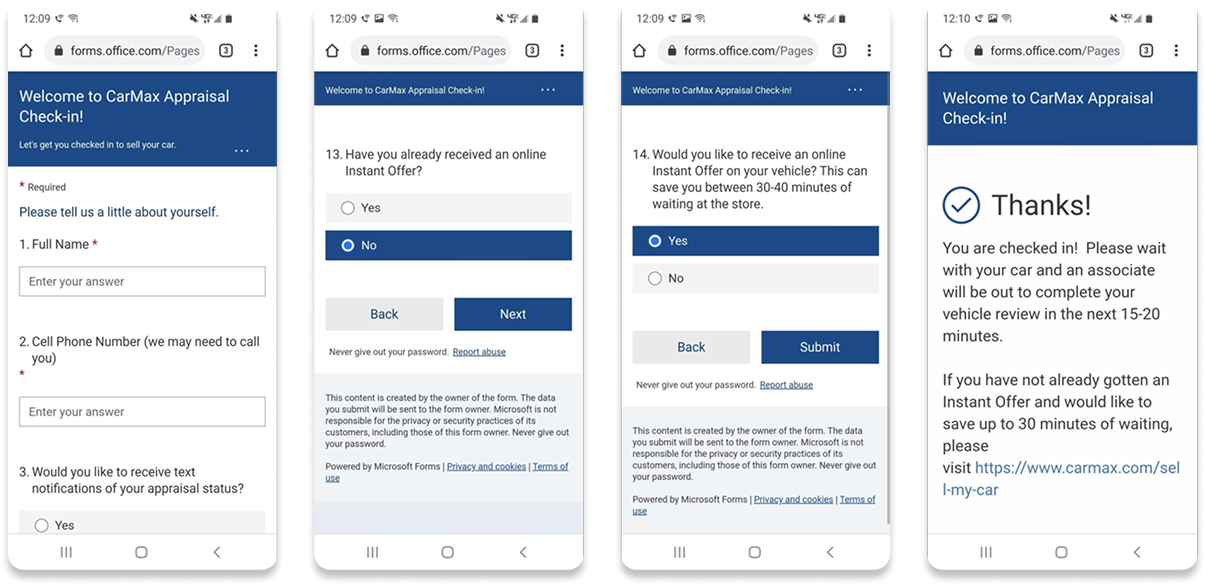
CarMax Self Check-In mobile mockups

Overview

In 2021, CarMax introduced the Instant Offer Tool, which allowed customers to receive an offer on their vehicle online. This self-check-in tool allowed customers to self-service when coming to the store to get their offer verified.

In higher volume stores, customers experience long wait times (up to 3 -5 hours) to be checked in by an associate, not including the actual car-selling process.

The Problem

CarMax's Instant Offer Tool has been very successful, leading to significant wait times for customers. Additionally, there is no transparency regarding customers' status in the appraisal process.

Three hour average wait times: In higher volume stores, customers experience long wait times for check-in by an associate, not including the actual car-selling process.

How Did We Identify the Problem?

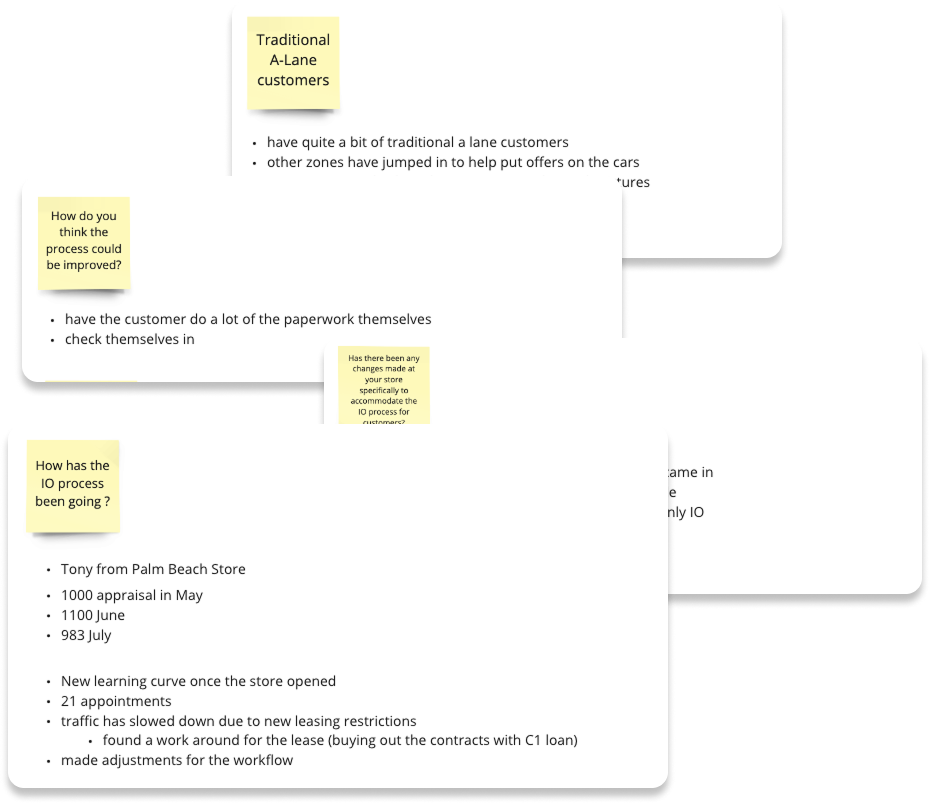
To identify the problem, we observed associates and customers during store visits and collected feedback from them through interviews.

Design thinking process: Discover, Define, Ideate, Prototype, Test

Differentiating the Problem

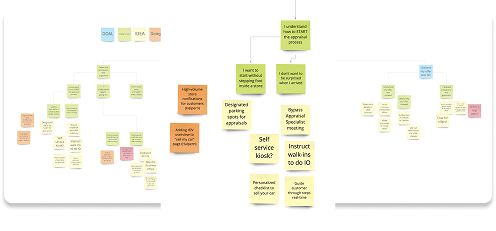
We collected and reviewed all of the data and used the solution tree method to plan how to solve the problem and conduct a quick MVP test.

Design thinking process: Discover, Define, Ideate, Prototype, Test

Self Check-In MVP Test Plan

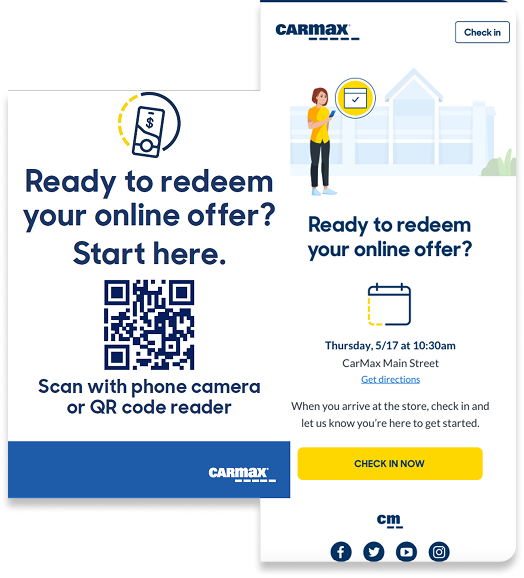
We provided Instant Offer customers with two self check-in options: an email link sent the morning of their appointment and a QR code displayed on signage inside the store.

Test Objectives:
Provide customers with self service check-in options.

Learning goals:

What percentage of customers will use self check-in?
Does removing the appraisal check-in volume increase Associate efficiency?

Test goals: 50% of IO customers will opt to use a self-service option.

Self check-in QR code kiosk mockup

The two methods customers could use to check-in via QR code or through the store lobby kiosk terminal to complete the report of the visit.

Self check-in QR code kiosk mockup

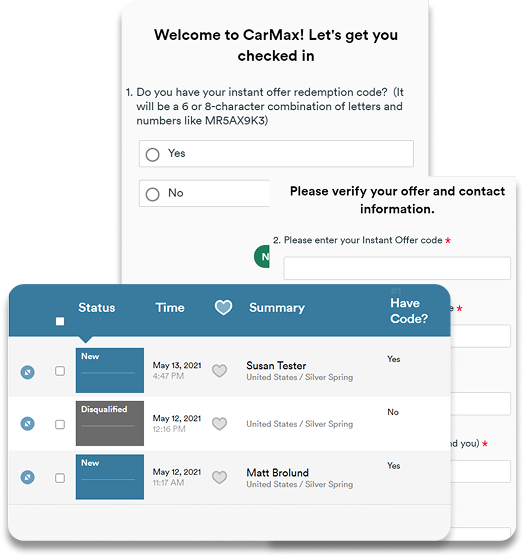
The customer completed the form in Ethnio to check-in.

Self check-in QR code kiosk mockup

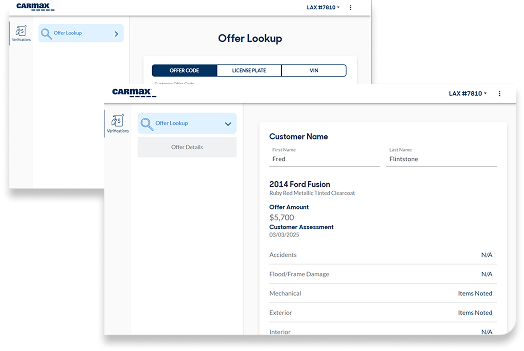
Once customers completed the form, we manually entered them into the microsite which begins the vehicle verification process, along with help the associate locate the customer’s vehicle.

Self Check-In MVP Test Plan — Results

28
Number of Instant Offer customers
16
Number of Instant Offer Check-Ins
12
Number of QR codes Check-Ins
4
Number of email Check-Ins
57%
Percentage of Check-Ins

Opportunities

We’ll need to provide a more productized way where customers aren’t able to check-in prior to their arrival.

Placement of the signs will be important therefore it doesn’t impact the greeting of other customers not checking in.

Check-in language will need to be tweaked, work with UX writer to help use intentional language that’ll help direct customers.

We’ll need to make sure that customers are able to reopen the check-in form if closed or not fully completed.

Training and clear communication with associates (Sales Consultants, Business Office, etc.) to streamline implementation of initiative will be needed.

We’ll need to provide additional options for customers to check-in other than their personal mobile device (I.e., tablet, iPad, etc.)

Next Steps

Update screens of project itself.

Discuss scope of project with Leadership

Run MVP test at XF store to review workflow against their process.

Gearing Up for the XF Store Test

Opportunity:
As an appraisal customer, I feel disappointed with the long wait times to get car appraised. As CarMax, we'd like to have as many customers use Self Check-In as possible.

Hypothesis:
We believe by providing customers with a self-service way to begin their vehicle appraisal, we can decrease the pressure on the Associates while increasing customer satisfaction.

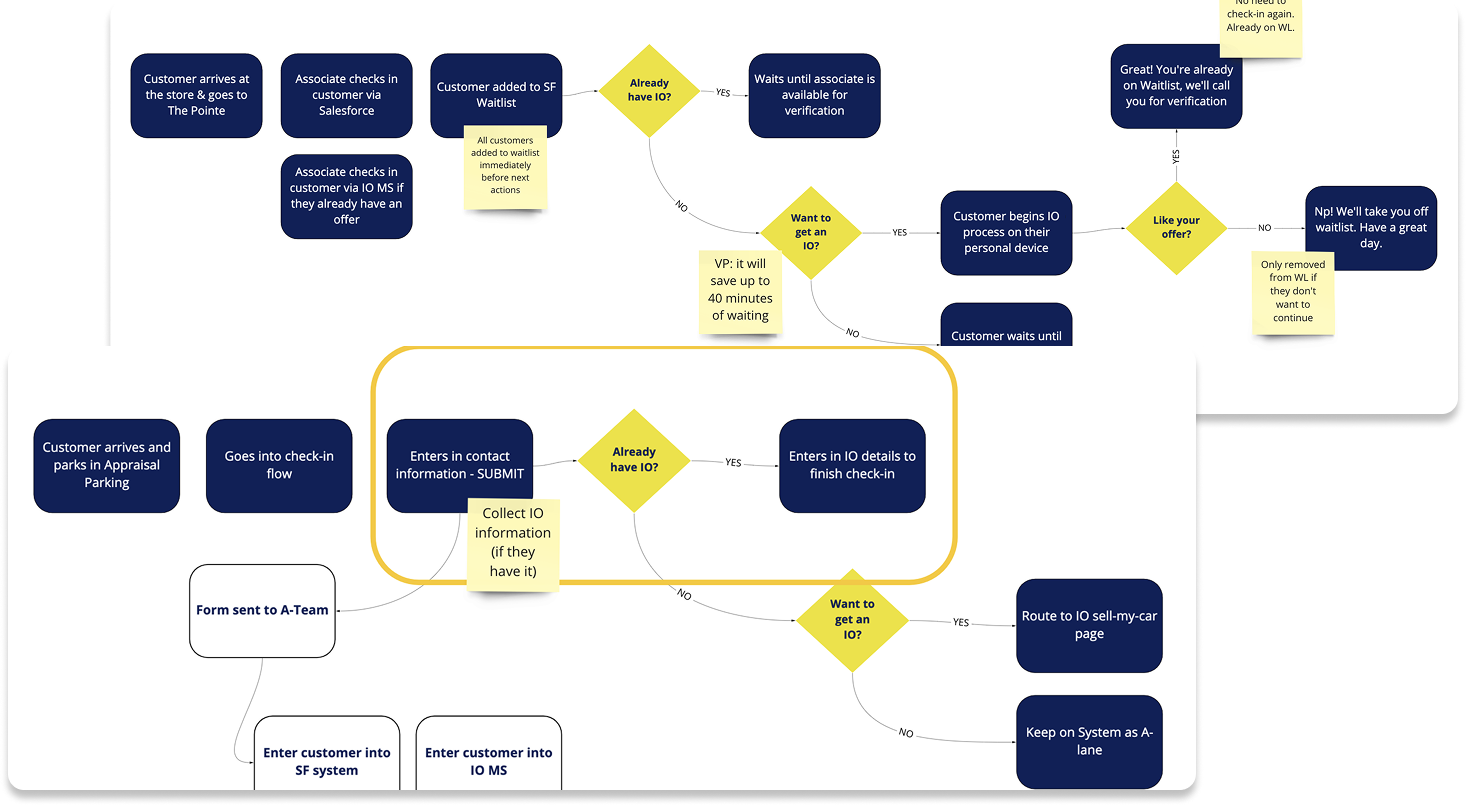
Store test hypothesis flow diagrams

We began planning for how we would conduct the test being that an XF store is setup differently than a traditional store.

Store test hypothesis flow diagrams

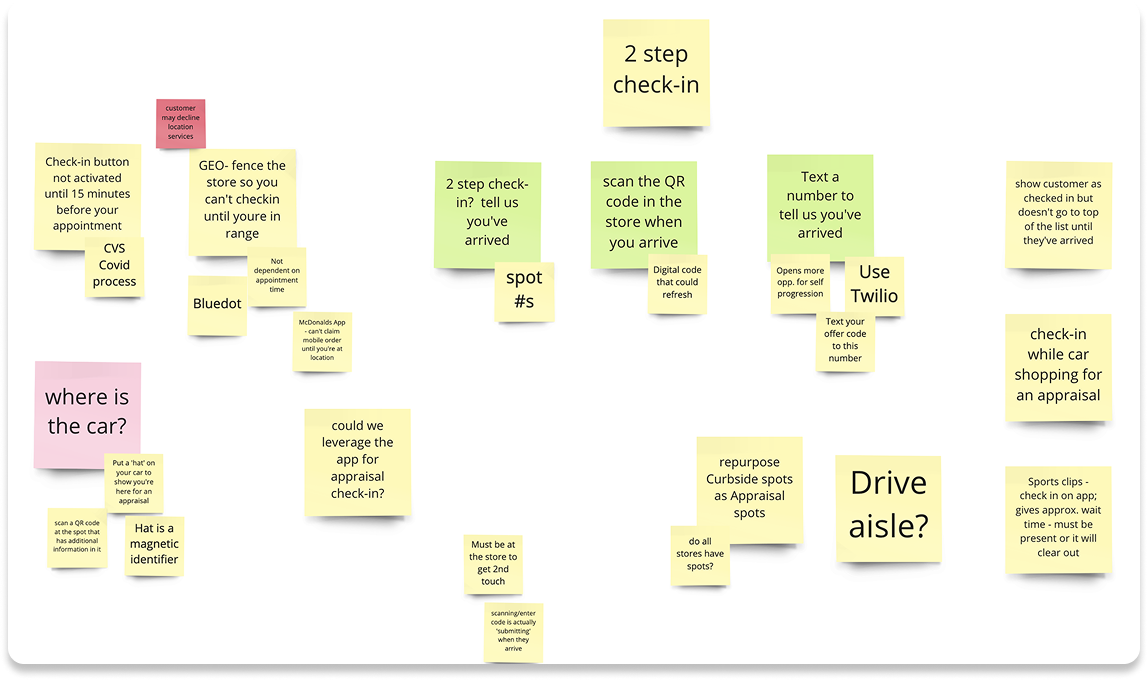
We began solutioning on how to prevent early check-in and other things that would cause a less than ideal experience.

Store test hypothesis flow diagrams

We continued to conduct interviews with XF stores to understand customer pain points around wait times and the selling experience.

XF Store Self Check-In Discovery

Test Objective:
We can save customers and associates “Time-to-Offer” by introducing them to Instant Offer during check-in if they don’t already have an IO.

Learning goals:
What percentage of A-lane customers can we capture and route to Instant Offer from within the store?
From there, what percentage of customers will check-in to continue the selling process for their vehicle?

Test goals:
50%+ of all appraisal customers will use self check-in
25%+ of A-Lanes will convert to IOs through check-in flow
Confirm order of operations for customer check-in routing to get an Instant Offer
Define Salesforce requirements

XF Store Test Plan

XF store exterior and parking lot photos

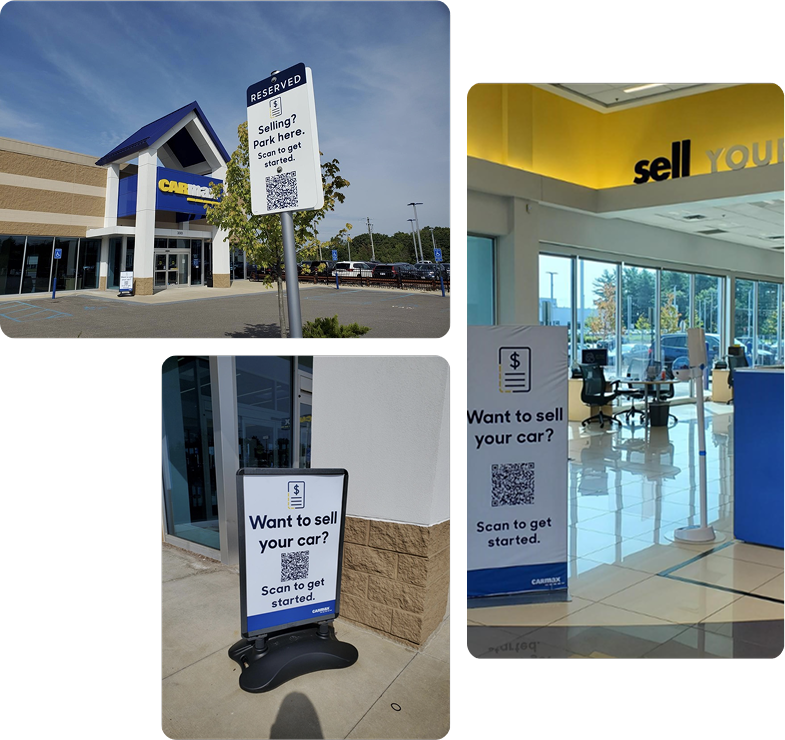
We placed signs with QR codes in the parking lot. Also, signs were places around the entrances in case a line develops at "the point".

Self check-in signage and kiosk photos

We used Microsoft forms to mimic check-in flow.

Limitations: Couldn't track customers through to Flow from Microsoft Forms.

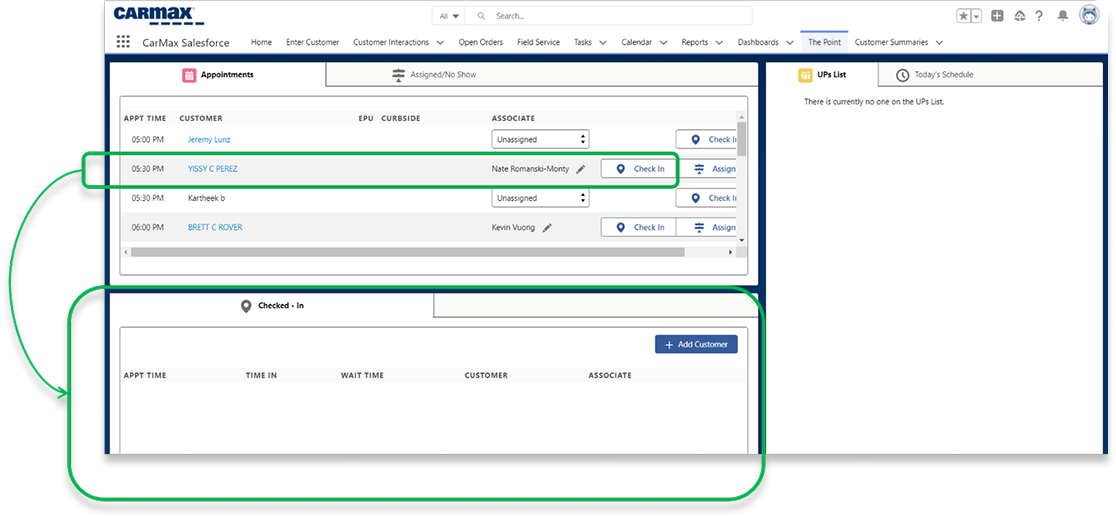
Coordinator and Salesforce check-in flow screens

When a customer with an appraisal appointment checks in, immediately move them to the Checked-In section at The Point. No need to auto assign, the Coordinator will do this.

Self check-in signage and kiosk photos

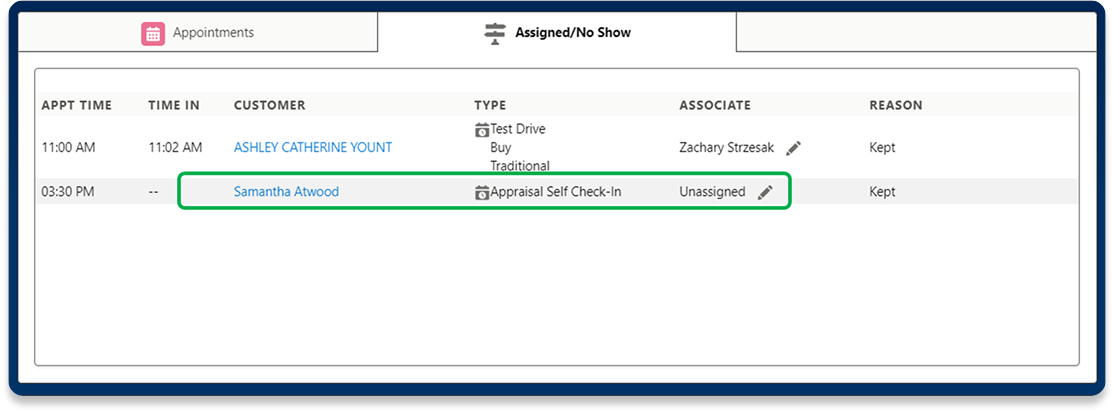
Coordinator would like to see the TYPE called out if the customer self checks in so they understand how they showed up in Salesforce.

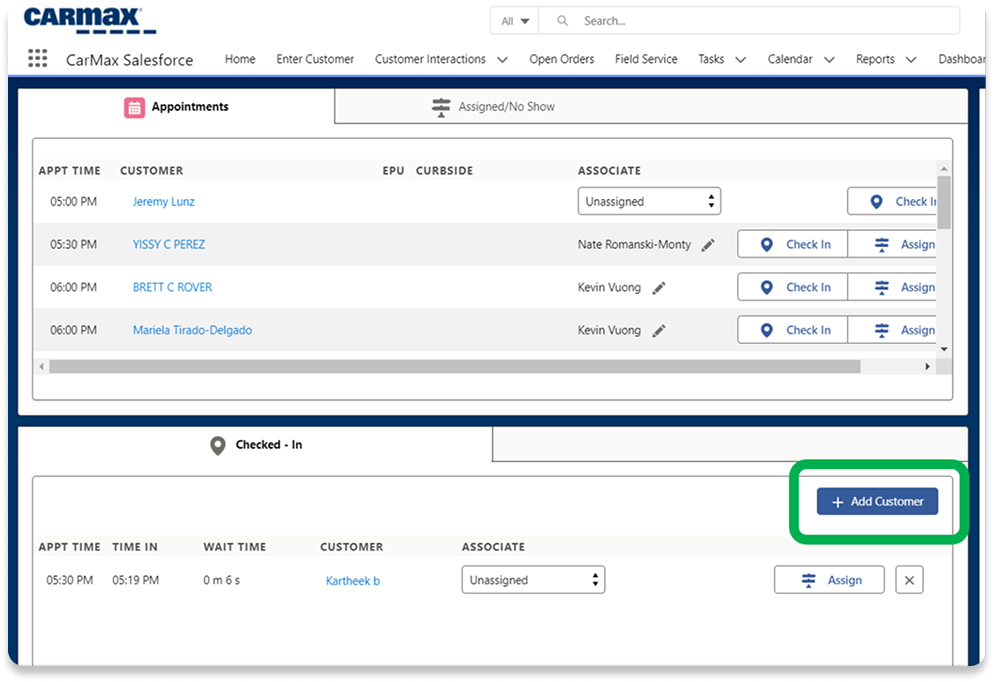
Coordinator and Salesforce check-in flow screens

If a customer checks in without an appointment, add them to Salesforce with the “Add Customer“ flow. Only Name and Phone required, notes are optional.

During the Test

The goal of self check-in is to provide customers with an option to get progress if they'd rather. There was a line at the tent, and it wasn't customers for customers to complete the check-in.

Customers who did use it, accessed check-in through the parking lot for the entrance.

Self check-in during the test kiosk and lot photos

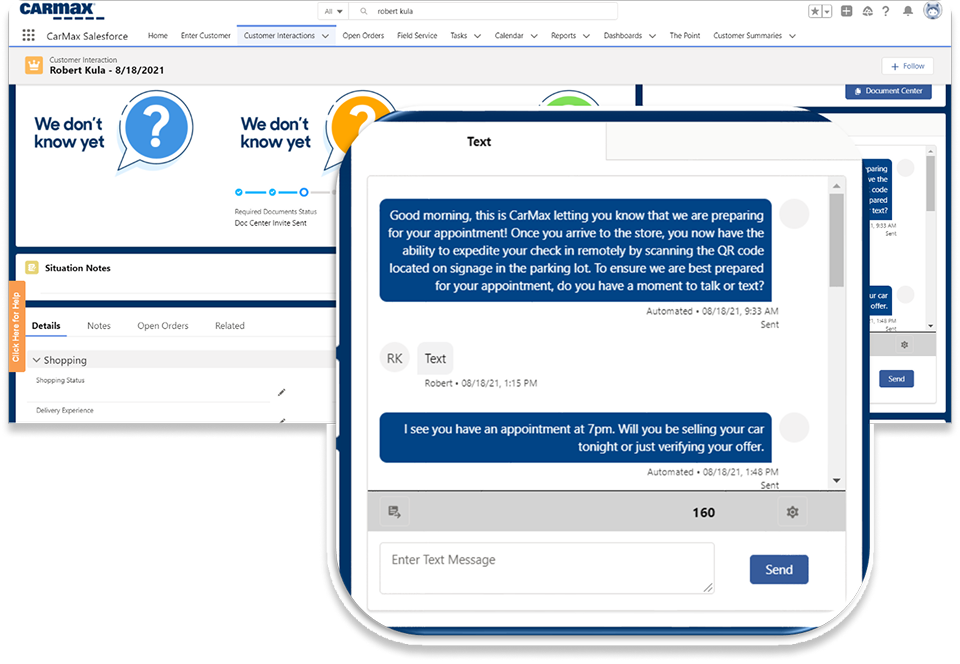
The Managers sent out text messages to appointment customers in the morning to help prep for the day (automation opportunity). We iterated by including language around scanning the QR code when they arrive to check-in.

Result: Direct Instant customers checking in at QR. Test event added a total of the Public link.

Self check-in during the test kiosk and lot photos

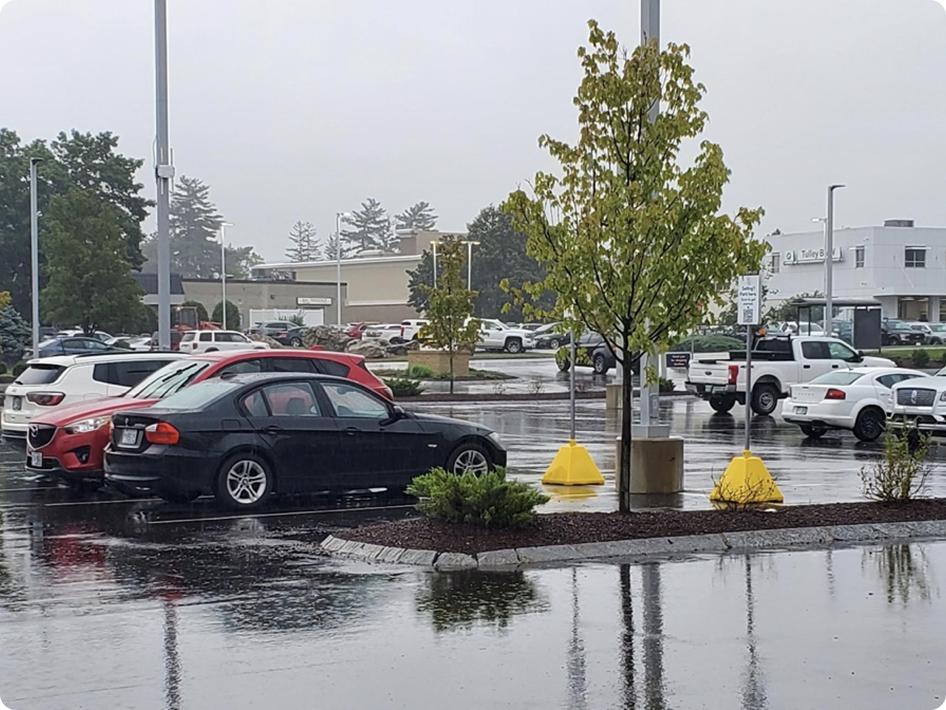
Test Day 3: Customers who used self check-in did so from inside their cars to avoid the rain. We included in our confirmation text to pull into the drive aisle, keeping customers dry.

XF Store Test Results

34
Total A-Lanes
19
Not converted to IO
16%
Sold Percentage
15
Converted to IO
44%
Percentage of Conversions

General Learnings

Store Hours:
Due to paperwork, teams are having to turn away walk-ins after a certain time before store closing due to not being able to complete the sale in time. Team will be incorporating this into the check-in app to direct customers to come inside for check-in if the store is not yet open or too soon to closing.

Differences between IO & Final Offer:
Associates see the IO value when checking into the Microsite. If they no longer do this step, they can’t see the IO value anymore to know if this is the same/different from final appraisal.

Collecting payoffs:
Associates use the same QR code when Checking-In a customer if they weren't self-servicing on their own, and it seemed to build trust with the customer just as well as a normal check-in process.

Check-in needs to be for everyone:
A lane customers were using check-in too.

True Appraisal Time:
Stores are adding customers to the Salesforce waitlist before the IO Microsite queue. The appraisal time data we pull starts at the time of check-in at the IO Microsite so we aren’t seeing the true length of time the customer has been waiting to begin their verification. Self check-in will add customers to the IO Microsite immediately and therefore we’ll see the true length of wait time.

Estimated Wait Times:
Very important for customers but this is generated by the associates with multiple variables. Is there a possible tech solution that make sense?

Parking is chaos:
Due to limited parking availability, people park anywhere. Parking also varies from store to store.

Email/pre-communication:
Email is not working but maybe we test text if we do pre-arrival communication.
Self Check-In Launch

Self check-in during the test kiosk and lot photos

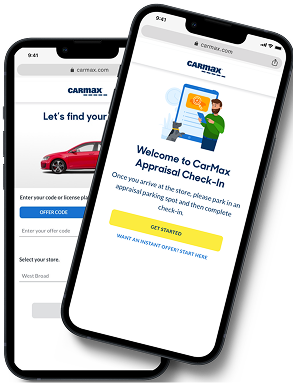
On September 27th, we launched the Self Check-In Product at a traditional store in Ft. Myers, Florida.

More than 50% of customers used the new app all three days we were there, and it improved their wait times and more than 75% of customers checked in without walking into the store.

As for me, I really enjoyed working on this project. I couldn’t have had a better team to work with. The teamwork was amazing and in addition to that, having a project that not only required research from the customer, it required us to work with associates, as well. I learned a lot, and felt myself grow as a product designer. Unfortunately, right after launch, the team found out it was splitting up, and the product was going to another team. It would’ve been nice to continue to iterate and improve the process.

Thank you for viewing!!!

Feedback is welcomed!